
perjantai 31. heinäkuuta 2015
Preparing for battle


tiistai 28. heinäkuuta 2015
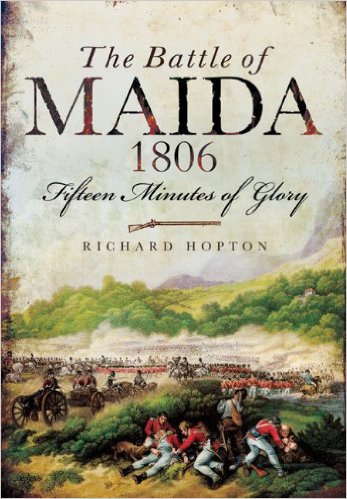
Book review: The Battle of Maida
Not much going on on the hobby front due to travel, wedding season and other holiday activities keeping me away from home and the painting station. I have however had quite a bit of time to read for a change.
I received a copy of Richard Hopton's Battle of Maida: Fifteen Minutes of Glory from Jonathan Freitag's 500 posts and 5000 comments commemoration draw at his blog Palouse Wargaming Journal. I'd read a bit about the battle already previously, but was keen to know more as it was one of the first instances where the English managed to defeat French troops in the field and also saw action between Swiss and Polish troops against the Brits.

The book devotes the first half to setting the background for the battle explaining the situation in southern Italy and the formation of the Third Coalition. Major commanders are also introduced and their backgrounds are explained. Especially on the British side there were many commanders who would later play important roles in the Peninsular and Waterloo campaigns. For example General Kempt (then Colonel) makes an appearance leading the Advance Guard which played an important role in winning the battle. The background section was well structured and gave a nice overview of the lesser known parts of the Third Coalitions actions as normally Austerlitz and the actions around it take the center stage.
Stuart's expedition into mainland Italy is handled in the second half of the book. With the Royal Navy in complete control of the seas Stuart was able to transport his small army of roughly 5000 infantry to Sant'Eufemia to threaten the supply lines of General Reynier who was fighting against a guerilla uprising in Calabria. The book does not paint a very flattering image of General Stuart instead showing him as a man without much of a plan, who abandoned his defensive positions to attack a numerically superior enemy and was saved by the competence of his subordinates and some luck.
The battle commenced when Stuart moved out to attack Reynier at the same time as Reynier had moved out from his positions in the high ground to attack Stuart on the beach. The two armies met on the plains with both of them deploying in line. The Brits held superiority in artillery, while the French were the only side to possess any cavalry. Reynier being dismissive about the British fighting quality after his experiences in Egypt sent his troops forward using his veteran regiments as the spearhead. What follows would go down in history as Kempt's advance guard turned the French veterans with two volleys fired at point blank range and followed by a bayonet charge. On the rest of the battlefield things weren't going as well for the British, but the timely arrival of 20th Foot on the French flank turned their advances there in to a retreat. The lack of cavalry on the British side would hamper their efforts to truly follow up their victory as a proper pursuit was not possible with the French cavalry and Swiss troops performing an effective rearguard action.

The battle was nevertheless a resounding success for the British with only 45 dead and roughly 300 wounded they had managed to cause massive casualties to the French who suffered around 700 dead and between 1000-2000 wounded. In addition to these casualties the French would suffer heavily at the hands of guerillas when retreating towards their main forces to the north. The British casualties were exceptionally low for the time and of those casualties over half would be suffered by the 2nd Brigade consisting of Highlander's who were new recruits and had to face attacks by French cavalry and artillery. Interestingly the Brits suffered more dead in the coming days as after the victory they billeted in a swampy area and many soldiers caught malaria which would end up killing far more men than the actual battle.
The end of the book handles the British advances in southern Italy after the battle, which helped to remove the threat of a French invasion of Sicily for many years. This would prove to be important as Sicily provided the Royal Navy with an important base of operations in the Mediterranean from where to control the seas.
All in all I really enjoyed the read and would recommend it to anyone interested in the Napoleonic era. It comes across as a very thoroughly researched book and highlights an area of operations that is usually shadowed by the larger battles that were going on at the time. For the British it was an important victory that would give them confidence when Napoleon otherwise seemed unstoppable. It is also one of the few Napoleonic battles that is actually honored in England with an area of London being named after it with the only other ones being Trafalgar and Waterloo.
And once again thanks to Jonathan for the generous gift! Truly provided good entertainment on a rainy day at the cottage.
I received a copy of Richard Hopton's Battle of Maida: Fifteen Minutes of Glory from Jonathan Freitag's 500 posts and 5000 comments commemoration draw at his blog Palouse Wargaming Journal. I'd read a bit about the battle already previously, but was keen to know more as it was one of the first instances where the English managed to defeat French troops in the field and also saw action between Swiss and Polish troops against the Brits.
The book devotes the first half to setting the background for the battle explaining the situation in southern Italy and the formation of the Third Coalition. Major commanders are also introduced and their backgrounds are explained. Especially on the British side there were many commanders who would later play important roles in the Peninsular and Waterloo campaigns. For example General Kempt (then Colonel) makes an appearance leading the Advance Guard which played an important role in winning the battle. The background section was well structured and gave a nice overview of the lesser known parts of the Third Coalitions actions as normally Austerlitz and the actions around it take the center stage.
Stuart's expedition into mainland Italy is handled in the second half of the book. With the Royal Navy in complete control of the seas Stuart was able to transport his small army of roughly 5000 infantry to Sant'Eufemia to threaten the supply lines of General Reynier who was fighting against a guerilla uprising in Calabria. The book does not paint a very flattering image of General Stuart instead showing him as a man without much of a plan, who abandoned his defensive positions to attack a numerically superior enemy and was saved by the competence of his subordinates and some luck.
The battle commenced when Stuart moved out to attack Reynier at the same time as Reynier had moved out from his positions in the high ground to attack Stuart on the beach. The two armies met on the plains with both of them deploying in line. The Brits held superiority in artillery, while the French were the only side to possess any cavalry. Reynier being dismissive about the British fighting quality after his experiences in Egypt sent his troops forward using his veteran regiments as the spearhead. What follows would go down in history as Kempt's advance guard turned the French veterans with two volleys fired at point blank range and followed by a bayonet charge. On the rest of the battlefield things weren't going as well for the British, but the timely arrival of 20th Foot on the French flank turned their advances there in to a retreat. The lack of cavalry on the British side would hamper their efforts to truly follow up their victory as a proper pursuit was not possible with the French cavalry and Swiss troops performing an effective rearguard action.
The battle was nevertheless a resounding success for the British with only 45 dead and roughly 300 wounded they had managed to cause massive casualties to the French who suffered around 700 dead and between 1000-2000 wounded. In addition to these casualties the French would suffer heavily at the hands of guerillas when retreating towards their main forces to the north. The British casualties were exceptionally low for the time and of those casualties over half would be suffered by the 2nd Brigade consisting of Highlander's who were new recruits and had to face attacks by French cavalry and artillery. Interestingly the Brits suffered more dead in the coming days as after the victory they billeted in a swampy area and many soldiers caught malaria which would end up killing far more men than the actual battle.
The end of the book handles the British advances in southern Italy after the battle, which helped to remove the threat of a French invasion of Sicily for many years. This would prove to be important as Sicily provided the Royal Navy with an important base of operations in the Mediterranean from where to control the seas.
All in all I really enjoyed the read and would recommend it to anyone interested in the Napoleonic era. It comes across as a very thoroughly researched book and highlights an area of operations that is usually shadowed by the larger battles that were going on at the time. For the British it was an important victory that would give them confidence when Napoleon otherwise seemed unstoppable. It is also one of the few Napoleonic battles that is actually honored in England with an area of London being named after it with the only other ones being Trafalgar and Waterloo.
And once again thanks to Jonathan for the generous gift! Truly provided good entertainment on a rainy day at the cottage.
tiistai 23. kesäkuuta 2015
Waterloo 2015: Day 2 'Allied Counter-attack'
Next up the second reenactment. This time officially featuring the Allied counterattack, but in reality consisting of most of the battle and sharing much of the commentary from the previous day.
Nevertheless the second battle day proved much better than the first one, at least in my opinion. The fighting was more organized and there seemed to be a proper plan for how it would proceed instead of the slightly random stuff from the day before. It also seemed like there were more reenactors this time around. Though in reality it was probably due to the fact that the fighting was more orchestrated and happened in a slightly more compact area allowing for concentrating of troops better.
Another plus was that the commentary was actually useful on this day. The first one only really had a few comments in English and those dealt with the fact that apparently Napoleonic soldiers were superhuman and even modern special forces couldn't do what they did back then. This time around they gave small history snippets from the battle at the points when the same action happened in the reenactment.
The weather was also nicer with it being far less windy than the day before and it was actually quite hot sitting in the stands. Though for visibility the slackening wind was slightly problematic. Luckily we didn't have much of an issue, but I would expect about a third of the crowd being slightly annoyed by the fact that all the smoke from Allied artillery was slowly blown towards them blocking their stands for most of the show. But you can't really do anything about the weather unless you are Soviet Russia firing random chemicals at clouds.
There was also sad news that on the Friday show one reenactor had passed away. A one minute silence was kept for him and for the soldiers who lost their lives in the real battle. Things didn't go as planned this time either with at least one reenactor being hurriedly carried away on stretchers. And once again some of the horses threw their riders and one even made it into the spectators before the show started.
There are less pictures of this one as our seating places were in bit of a difficult location with the wall blocking some of the view and some wonderful people blocking our view by standing up a lot to take pictures. Oh well, luckily we were there for both days :)


Nevertheless the second battle day proved much better than the first one, at least in my opinion. The fighting was more organized and there seemed to be a proper plan for how it would proceed instead of the slightly random stuff from the day before. It also seemed like there were more reenactors this time around. Though in reality it was probably due to the fact that the fighting was more orchestrated and happened in a slightly more compact area allowing for concentrating of troops better.
Another plus was that the commentary was actually useful on this day. The first one only really had a few comments in English and those dealt with the fact that apparently Napoleonic soldiers were superhuman and even modern special forces couldn't do what they did back then. This time around they gave small history snippets from the battle at the points when the same action happened in the reenactment.
The weather was also nicer with it being far less windy than the day before and it was actually quite hot sitting in the stands. Though for visibility the slackening wind was slightly problematic. Luckily we didn't have much of an issue, but I would expect about a third of the crowd being slightly annoyed by the fact that all the smoke from Allied artillery was slowly blown towards them blocking their stands for most of the show. But you can't really do anything about the weather unless you are Soviet Russia firing random chemicals at clouds.
There was also sad news that on the Friday show one reenactor had passed away. A one minute silence was kept for him and for the soldiers who lost their lives in the real battle. Things didn't go as planned this time either with at least one reenactor being hurriedly carried away on stretchers. And once again some of the horses threw their riders and one even made it into the spectators before the show started.
There are less pictures of this one as our seating places were in bit of a difficult location with the wall blocking some of the view and some wonderful people blocking our view by standing up a lot to take pictures. Oh well, luckily we were there for both days :)
Prussian artillery preparing for battle. They caught quite a surprising amount of hay and other material when moved. Could be a nice modelling opportunity to make them look more real :)


The French command waiting for battle to commence.

Prussian commanders with their wives.

The massed French cavalry

Another runaway horse. This one made it into the crowd of spectators before being caught.

The camp followers had their own place to follow action.


Some skirmishing between hussars before the battle.


Allied pickets must have been sleeping as Napoleon himself has made it behind their lines with his Guard to inspect Allied positions and greet the crowds.


Minor skirmishing continues before the French masses.


French HQ preparing their plans.

This was mostly as good as it got regarding visibility for quite a large proportion of the stands.


Wellington doing his best to entertain the crowds.

The French attack commences and Allied skirmishers are slowly pushed back.

French light infantry is surprised by Brunswick cavalry

Brunswick Hussars are driven off by French Guard cavalry.


The Union Brigade charges the French guns before being counterattacked by French cavalry.


French infantry slowly pushing forward, despite skirmishers harassing them every step.


The Prussians arrive around Papelotte.


The Guard advances!


Scots Grays showing off captured French colours.


One French lancer makes it behind the Allied lines and makes a dash for Wellington.

As the night draws near the French are finally defeated and Napoleon flees.


Tilaa:
Blogitekstit (Atom)